Tim’s view
The war in Iran will force governments and companies to rethink the necessary conditions for energy security.
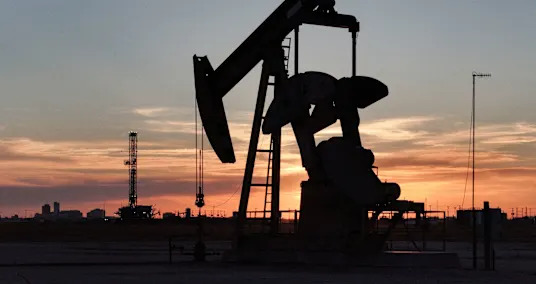
The prevailing sentiment at CERAWeek has been that financial markets have not yet come to terms with how long lasting the oil and gas market disruption from the war is likely to be; higher prices will very likely loom even if the US military quickly prevails. No matter what happens next, the war underscores the volatility inherent to the global fossil fuel trade at a time when alternative technologies are proliferating.
Sure, renewables are exposed to upfront, capex-related risk. And yes, China effectively controls the market for wind, solar, and battery hardware, and for the minerals they require. But once they’re installed, these technologies are largely insulated from geopolitical events, as Pakistan has proved in recent weeks by leaning on solar while neighboring Bangladesh suffers from skyrocketing gas prices. “The fact that the wind and sun are free and domestic and inexhaustible doesn’t get nearly as much play as it deserves,” David Crane, a former senior US energy official who is now CEO of the investment firm Generate Capital, told me this week. Put another way, the sun — unlike, say, a strait — can’t be shut down by one’s adversaries.
Fossil fuels, conversely, are permanently exposed to ongoing opex risk. Even the US, the world’s top producer, can’t completely insulate itself from price spikes. But the fact is that every country will need a mix of all technologies for the foreseeable future to maintain access to reliable, affordable energy.
After the energy crisis of the 1970s, many countries leaned diversified international trade and coordination as the solution, hoping that increasing the number of sources of supply would diminish any one actor’s ability to throttle the market. That mostly worked for 50 years. The legacy of this war will be a shift by countries to lean trade as much as they can, Meghan O’Sullivan, a former National Security Council official and energy geopolitics expert at Harvard, told me: “The lesson many will take away from this is that being exposed to global shocks is something they need to avoid.”
Notable
The replacement for the liberal international order “won’t be negotiated in Geneva or adjudicated in The Hague,” writes Foreign Policy, “It will be determined by who controls the energy flows, mineral deposits, and technological systems on which all modern life now depends.”
latest_posts
- 1
 Most loved Specially prepared Espresso Mix: Which Meal Do You Adore the Most?
 - 2Bad flu season getting worse; skyrocketing cases set state record
- 3Israel faces tough choices over haredi draft exemptions, legal expert warns
- 4Instructions to Explore the Therapy Choices for Cellular breakdown in the lungs
- 5Equality requires universal draft, participation in economy and workforce, MK Liberman says




- Consume Fat Quick: 10 Demonstrated Activities for Ideal Outcomes
- What to know about new CDC deputy director who has been critical of COVID vaccines
- Tata Motors, BMW among automakers set to raise prices in India
- Southern Californians, your health insurance costs could rise in 2026
- Heavenly Pastry Confrontation: Pick Your #1 Sweet Treat!
- Watch Atlas V rocket launch its heaviest-ever payload early on April 4
- Putin says Russian forces will seize capital of Zaporizhzhya
- Brexit's Effect on New York's Ascent as a Main Monetary Center
- The 10 Most Compelling Forerunners in Innovation